
3 min read
Goerli is deprecated. Use Sepolia for application development and Hoodi for validator testing, as described in the Ethereum network documentation. The Goerli comparison below provides historical context; the walkthrough uses Sepolia.
Overview
Sepolia is the recommended Ethereum testnet for application development; Goerli is deprecated. This guide explains their different roles and shows how to create a Sepolia endpoint, then verify its chain ID without spending test ETH.
What You Will Do
- Learn about Goerli and Sepolia Testnet
- Create a Sepolia endpoint with Quicknode
- Get ETH on Sepolia using the Multi-Chain Quicknode Faucet
- Request data from Sepolia using Quicknode
What You Will Need
- A will to learn!
- A Quicknode account (you can create one for free here)
What are Ethereum Testnets?
Ethereum testnets are alternative versions of the main Ethereum blockchain that allow developers to test and experiment with new features, smart contracts, and decentralized applications (dApps) without the need for real Ether (ETH) or risking funds on the mainnet. Testnets are designed to replicate the behavior and characteristics of the mainnet but with a smaller user base and less expensive fees.
Note that testnets have their own supply of Ether (ETH) which doesn't have any real-world value and is used to pay the gas fee on that particular testnet.
What is Goerli?
Goerli was an Ethereum testnet used for application, client, and validator testing. It launched in 2019 and later used proof of stake. It is no longer a supported choice for a new development workflow.
For current network choices, follow the Ethereum testnet guidance rather than relying on historical migration dates.
What is Sepolia?
Sepolia is an Ethereum proof-of-stake testnet intended for smart contract and application development. Its permissioned validator set is operated by client and testing teams.
An application developer can deploy contracts and make JSON-RPC requests on Sepolia without operating a validator. Test ETH pays transaction gas; the read-only chain ID request in this guide does not require it.
Key Differences
| Network | Role | Status |
|---|---|---|
| Goerli | Historical application, client, and validator testing | Deprecated |
| Sepolia | Smart contract and application testing | Recommended for application development |
| Hoodi | Validator and staking workflow testing | Intended for validator testing |
A testnet's accounts, balances, and contracts are separate from mainnet. Use test credentials and test assets when following development examples.
Creating an Ethereum Sepolia Endpoint with Quicknode
Create a Quicknode account and select Ethereum Sepolia when creating an endpoint.
To create an endpoint, click Create Endpoint and choose the blockchain and network (e.g., Ethereum Sepolia testnet)

(Optional) Retrieving ETH on Sepolia Testnet
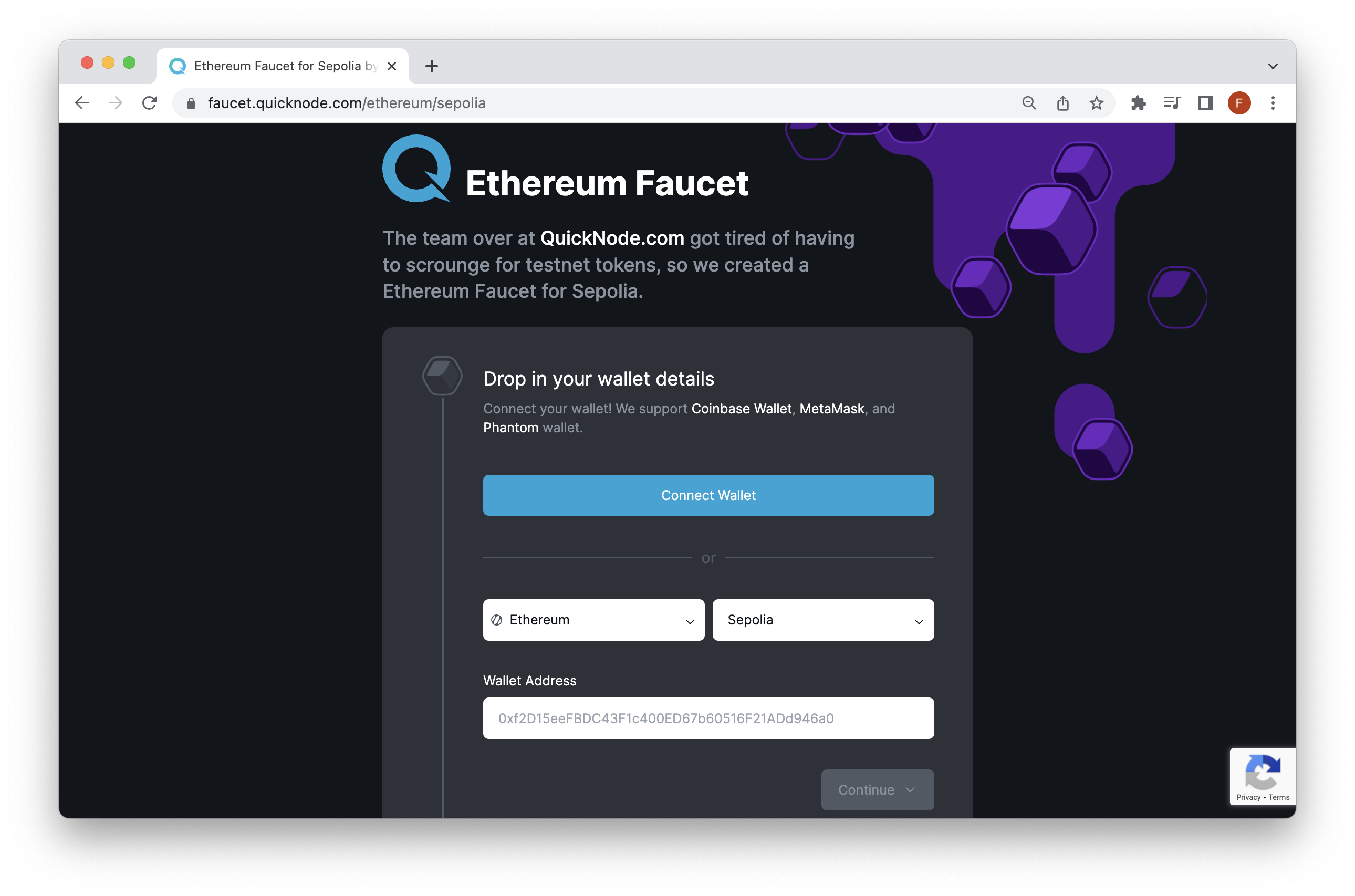
Although not required for this guide, if you're in need of ETH on Sepolia testnet, the Multi-Chain Quicknode Faucet makes it easy to obtain ETH!
Navigate to the Multi-Chain Quicknode Faucet and connect your wallet or paste in your wallet address to retrieve test ETH. You can also tweet out your request to get a bonus!
Testing your Ethereum Sepolia Endpoint
Use eth_chainId to check which network your endpoint serves. Enter the endpoint at the hidden prompt so it is not written directly into shell history:
printf 'Quicknode Sepolia endpoint: '
read -rs QUICKNODE_RPC_URL
printf '\n'
export QUICKNODE_RPC_URL

curl "$QUICKNODE_RPC_URL" \
  -X POST \
  -H "Content-Type: application/json" \
  --data '{"method":"eth_chainId","params":[],"id":1,"jsonrpc":"2.0"}'
A Sepolia endpoint returns chain ID 11155111, encoded as 0xaa36a7:
{"jsonrpc":"2.0","id":1,"result":"0xaa36a7"}
If the result differs, check the blockchain and network selected for the endpoint. A successful response confirms that the request reached a Sepolia endpoint; it does not test a contract deployment or transaction submission.
Additional Resources
Network Information
- Chain ID: 11155111
- Currency Symbol: SepoliaETH
Additionally, if you want to run your own Sepolia node
you need an execution client and a consensus client. Follow the Ethereum node architecture documentation when choosing and connecting them.
Looking Forward
Testnet recommendations change as networks are retired or introduced. Check the Ethereum network documentation before starting a project or validator setup.
Final Thoughts
You can use Sepolia to test an application and confirm your endpoint's network with eth_chainId. Treat Goerli references as historical context, and check the current network guidance before choosing a testnet.
If you're having trouble, have questions, or just want to talk about what you're building, drop us a line on Discord or Twitter!