Quicknode, Ethereum and Delphi
Quicknode, Ethereum and Delphi
Setting up and managing a blockchain node is a difficult, time- and resource-consuming task... Here’s how to plug your free Quicknode endpoint in Delphi code 👉

USDC Yield With Cover Built InQuicknode Earn now runs USDC yield with cover for protocol risk built in, underwritten by OpenCover. Six covered vaults on Base.
공지사항 읽어보기SOC 2 Type II 인증 · ISO 27001
Quicknode, Ethereum and Delphi
Setting up and managing a blockchain node is a difficult, time- and resource-consuming task... Here’s how to plug your free Quicknode endpoint in Delphi code 👉
March 16, 2020 — 2 min read
While Infura is an awesome gateway to Ethereum, when you have a high-traffic decentralized application then you might have a need for maximum performance, non-funnelled access to the blockchain.
Yes you can run your own Ethereum node, but setting up and managing a blockchain node is a difficult, time- and resource-consuming task. Not to mention that it is your responsibility to keep your node up to date with node and network upgrades.
Quicknode is a so-called remote node service that gives you all the power of a full-node without running one yourself. They have a free plan for developers, and if your decentralized application is ready to scale up, they have membership plans for up to 10 million requests/day. This can make a world of difference in the way your decentralized application feels for your users.
Let’s create a free account and obtain a complimentary endpoint to the Ethereum blockchain. Go to the Quicknode website and sign up. After signing up and signing in, you are greeted by your complimentary node:
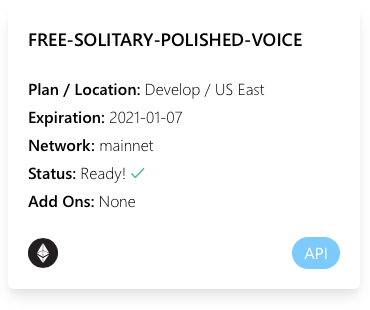
Your node comes with the following JSON-RPC web3 provider over HTTPS:
https://<your-node-name>.quicknode.pro/<your-token>/
Now let's plug your HTTPS endpoint into Delphi code. Launch Delphi, and then start a new project. Please make sure Delphereum and the dependencies are in your search path. Copy and paste the code example from GitHub Gist here.
Please note that you will need to replace <your-node-name> 그리고 <your-token>in the example above.
The example above breaks down to this. After we have created a new instance of the Delphereum client, we will then call a function named web3.eth.blockNumber(). Because calls to the Delphereum library are asynchronous, the web3.eth.blockNumber function expects a so-called promise. Inside this promise, we get the number of the most recent block and prompt that number in a message box. Please note that we need to synchronise the execution state with the main thread, and that is what TThread.Synchronizedoes for us.
Congratulations! You have successfully connected your Delphi application to the Ethereum blockchain via Quicknode.

2017년에 설립된 Quicknode 개발자와 기업을 위해 기관급 블록체인 인프라를 Quicknode . 99.99%의 가동률과 80개 이상의 체인을 지원함으로써, 팀들은 타협 없이 온체인 애플리케이션을 구축하고 확장할 수 있습니다.
최신 엔지니어링 인사이트, 제품 업데이트, 웹3 뉴스를 여러분의 이메일로 바로 받아보세요.