Ethereum Wallet Explorer
The Ethereum Wallet Explorer uses Quicknode's Ethereum endpoint and APIs to query the blockchain for tokens, transactions, and NFTs associated with a given wallet.



Visão geral
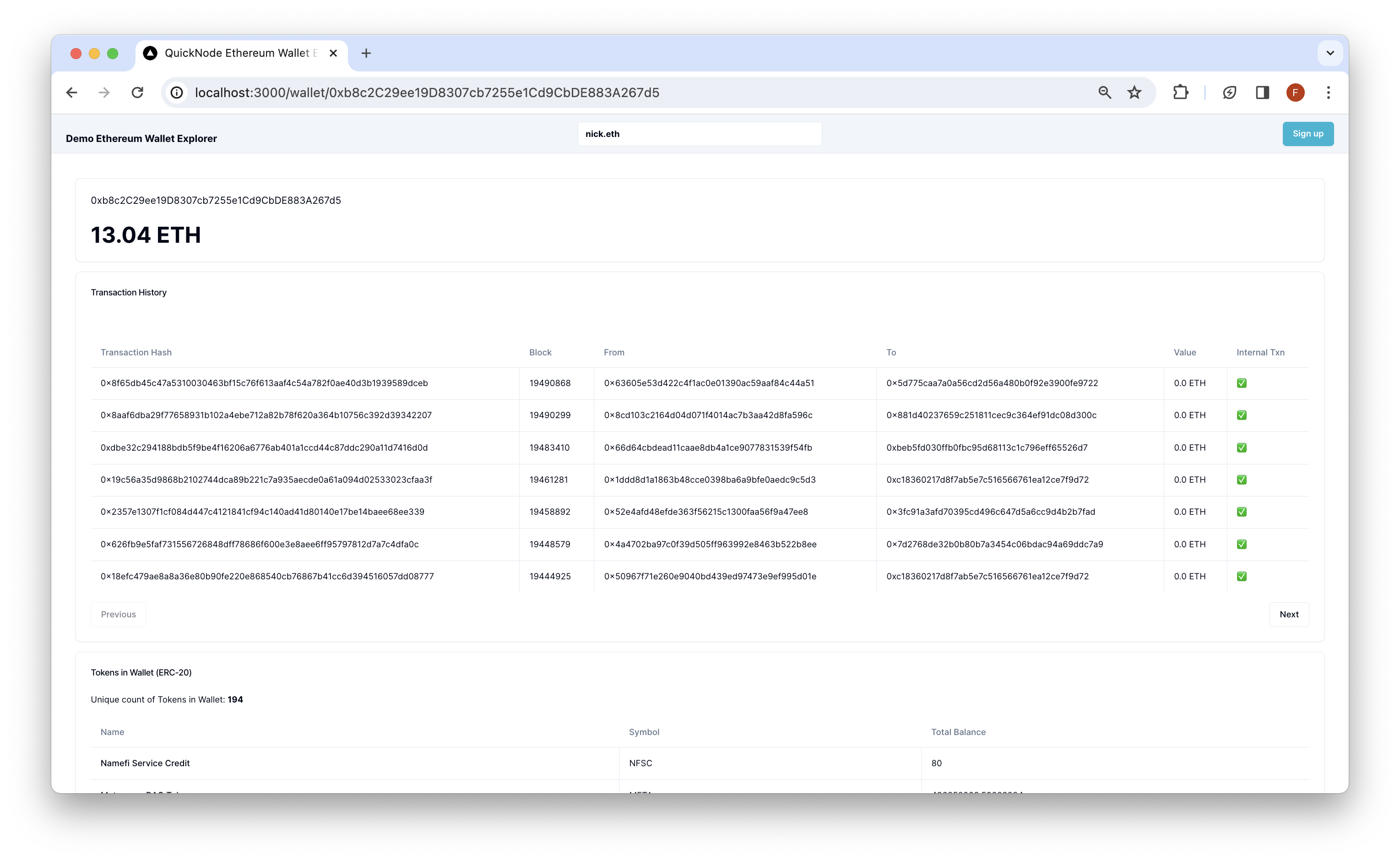
The Ethereum Wallet Explorer demonstrates how to use your Quicknode Ethereum endpoint, the Blockbook product, and an endpoint add-on to query tokens, transactions, and NFTs associated with a given wallet.
To run this demo with full functionality, you need the free Pacote da API v2 para tokens e NFTs endpoint add-on and access to the API do Blockbook.
A demonstração utiliza Next.js 14 projeto iniciado com create-next-app.
Primeiro passos
Instalar dependências
Primeiro, instale as dependências:
npm instalar
# ou
yarn
# ou
pnpm instalar
# ou
bun install
Definir variáveis de ambiente
Renomear .env.example para .env.local e atualize com o seu EndpointEthereum Quicknode Ethereum .
ETHEREETHEREUM_ETHEREUMURLmainnet
Primeiro, execute o servidor de desenvolvimento:
npm executar dev
# ou
yarn dev
# ou
pnpm dev
# ou
bun dev
Aceda a http://localhost:3000 no seu navegador para ver o resultado.
Utilizar a Dapp
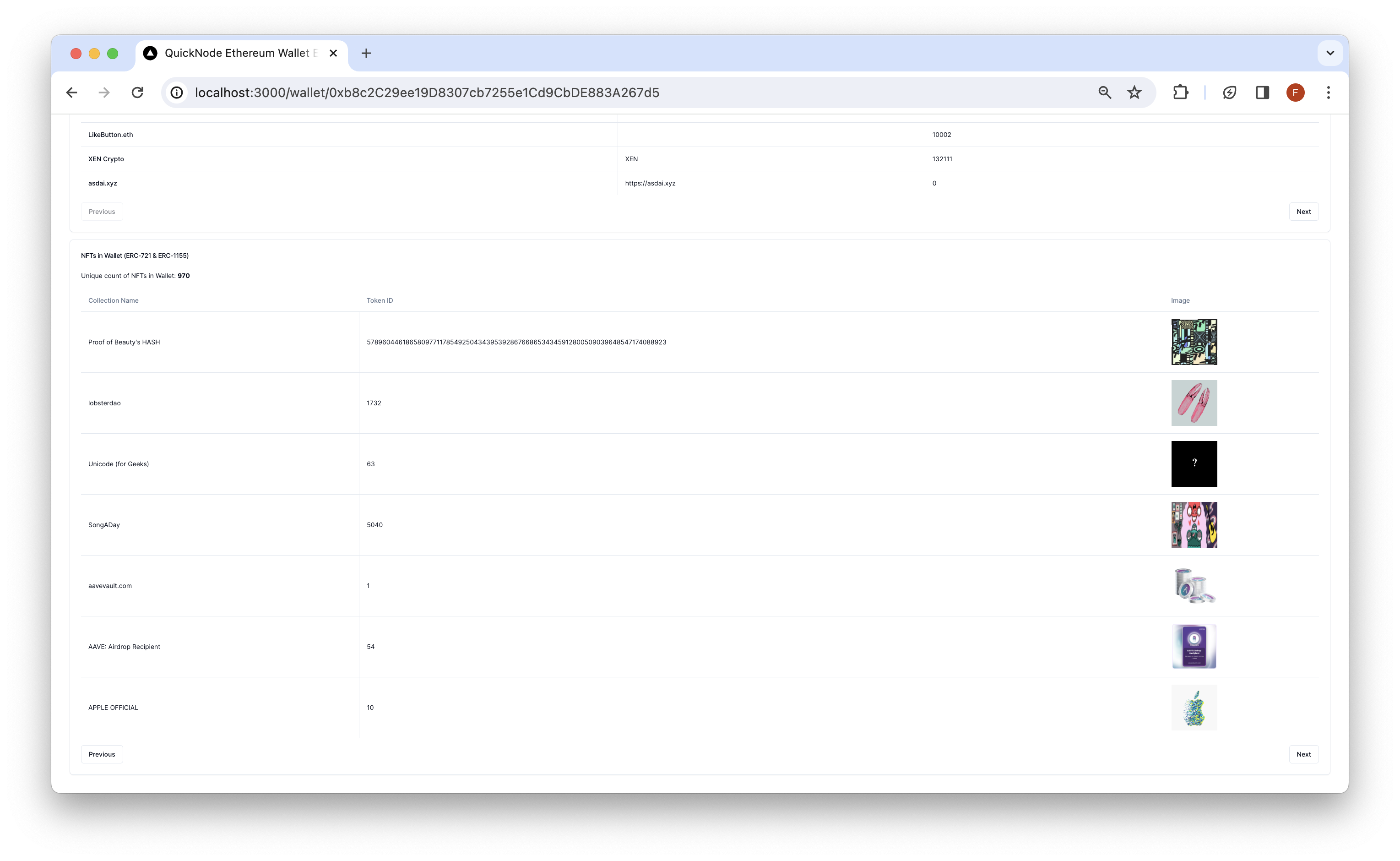
Procure um endereço Ethereum e prima Enter. A Dapp irá redirecionar para /carteira/[endereço] and query the Ethereum blockchain for the wallet's token balances, transactions, and NFTs. Results are rendered in respective cards.
Arquitetura
src/
├── app/
│   └── api/
│       └── wallet/
├── componentes/
    ├── explorer/
    └── cabeçalho/
-
API- Contém as rotas da API para as chamadas Ethereum . Estas podem ser acedidas a partir do cliente através de/api/wallet/[método]?walletAddress=[endereço]. These GET requests use theÉtereslibrary to interact with Ethereum and parse data, thePacote da API v2 para tokens e NFTsendpoint add-on to retrieve NFT and ERC-20 token information, and theAPI do Blockbookto retrieve transaction history for any Ethereum address. -
componentes- Contém os componentes React para a dapp.- O
exploradorO componente contém componentes do lado do cliente que chamam as rotas da API e apresentam os resultados. - O
headerO componente contém a barra de pesquisa da dapp.
- O
Implantar no Vercel

Pré-visualização
Documentação do Next.js
Para saber mais sobre o Next.js, consulte os seguintes recursos:
- Documentação do Next.js — conheça as funcionalidades e a API do Next.js.
- Aprenda Next.js — um tutorial interativo sobre o Next.js.
Podes consultar o repositório do Next.js no GitHub — os teus comentários e contribuições são bem-vindos!
- Fazer fork do repositório
- Criar uma branch de funcionalidades:git checkout -b feature/amazing-feature
- Faça commit das suas alterações:git commit -m "Add amazing feature"
- Faça push da sua branch:git push origin feature/amazing-feature
- Abrir um Pull Request.