🤖 新着:Quicknode AIクックブック AIプログラミングの10の実証済みレシピ エージェント.
レシピを見る 暗号資産ウォレットとは:ブロックチェーン の資産を安全に管理する |Quicknode
ニュースレターでは、無料のリソース、Quicknodeの最新情報、Web3に関するインサイトなどをお届けします。
CLI、Admin API 、MCP、SDK 、および75以上のチェーンに対応したAIネイティブツール。by 開発者 を構築し、開発者 向けに提供しています。
Python、Ruby、JavaScriptの最新コード例。スマートコントラクト、NFT、dAppsに関する詳細なガイド。
SOC 2 タイプ II 認証取得・ISO 27001
回答 > ウォレットと本人確認について > 仮想通貨ウォレットとは? // Tags
暗号資産ウォレット ブロックチェーン ウォレット
要約: 暗号資産ウォレットとは、 ブロックチェーン ネットワークとやり取りするために必要な暗号鍵を保管するツールです。その名称とは裏腹に、ウォレットは、物理的な財布が現金を入れるのと同じように、実際に暗号資産を「保管」するものではありません。 資産自体はブロックチェーン 上に存在します。ウォレットが保管しているのは秘密鍵であり、これはあなたがその資産の所有者であることを証明し、送金、受取、管理を行う権限を与える秘密のデータです。秘密鍵がなければ、資金にアクセスすることはできません。鍵のセキュリティが適切に確保されていない場合、秘密鍵を入手した者は誰でも資産をすべて奪うことができます。
わかりやすい説明 あなたの仮想通貨は、ウォレットアプリの中に存在するわけではありません。それはブロックチェーン 上にあり、誰でも閲覧できる公開台帳に記録されています。ウォレットが保持しているのは、その記録への鍵です。これを銀行の貸金庫のようなものと考えてみてください。貴重品は貸金庫の中にあります。ウォレットは、それを開けるための鍵です。鍵を紛失すれば、貴重品は永遠に取り出せなくなります。誰かに鍵をコピーされてしまえば、その人は貸金庫の中身をすべて持ち去ってしまう可能性があります。
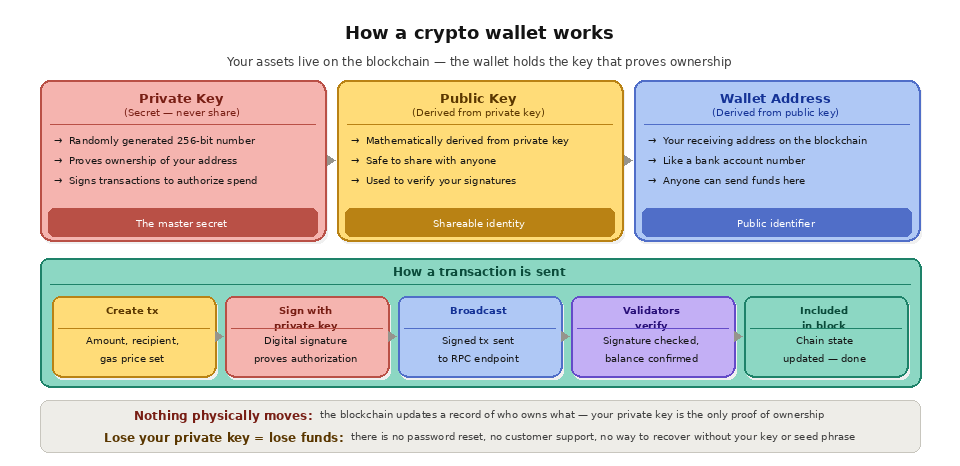
すべての暗号資産ウォレットには、3つの主要な構成要素があります。秘密鍵は、ランダムに生成された256ビットの数値であり、本質的には非常に長いパスワードのようなもので、ブロックチェーン のアドレスにある資産を完全に管理するためのものです。公開鍵は、秘密鍵から数学的に導き出されたもので、自由に共有することができます。ウォレットアドレスは公開鍵から導き出され、受取アドレスとして機能します。これは、他者があなたに資金を送金する際に使用する銀行口座番号に相当します。
仮想通貨を「送金」する際、ウォレットは秘密鍵を使用して、その取引を承認したことを証明するデジタル署名を作成します。この署名付き取引はブロックチェーン ネットワークに送信され、そこでバリデーターが署名を検証し、残高が十分であることを確認した上で、その取引をブロックに組み込みます。この過程において、物理的に何かが「移動」することは一切ありません。ブロックチェーン は、単に誰が何を所有しているかという記録を更新するだけです。
仮想通貨ウォレットの種類 ウォレットは、秘密鍵の保管方法や、インターネットへの接続を維持しているかどうかに基づいて分類されます。
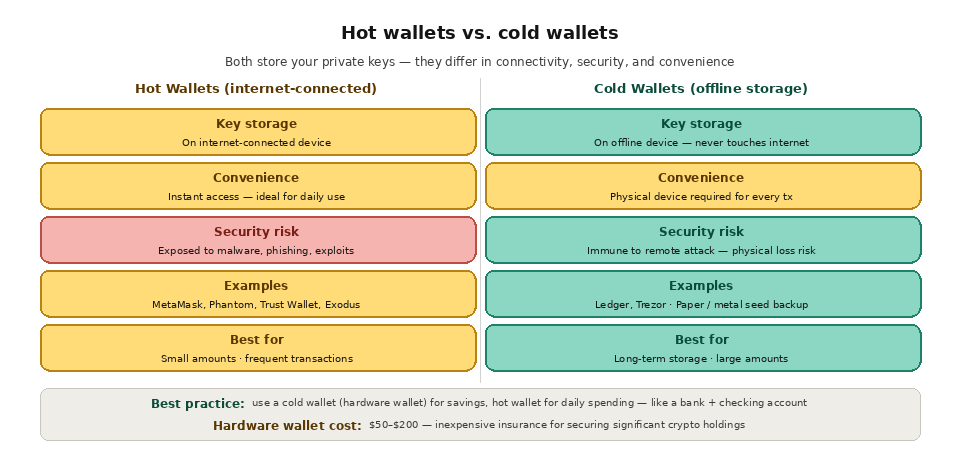
ホットウォレットとは 、インターネットに接続されたデバイス上に秘密鍵を保管するソフトウェアアプリケーションのことです。その形態はいくつかあります。MetaMaskやPhantomのようなブラウザ拡張機能型ウォレットは、ウェブブラウザ内で動作し、分散型アプリケーション(DApp)と直接やり取りすることができます。Trust WalletやCoinbase Walletのようなモバイルウォレットはスマートフォン上で動作し、日常的な取引やQRコード決済に便利です。Exodusのようなデスクトップウォレットはパソコン上で動作し、ブラウザ拡張機能型よりも機能豊富なインターフェースを提供します。
ホットウォレットは利便性とアクセスしやすさを重視しています。取引の送信、DeFiプロトコルとのやり取り、ポートフォリオの管理などを数秒で実行できます。その代償としてセキュリティ上のリスクがあります。秘密鍵がインターネットに接続されたデバイス上に存在するため、マルウェア、フィッシング攻撃、ブラウザの脆弱性、さらには重要なデータを読み取って外部へ流出させる可能性のある不正なブラウザ拡張機能など、さまざまな脅威にさらされることになります。
コールドウォレットは 、インターネットに一切接続されないデバイスに秘密鍵を保管するものです。 LedgerやTrezorなどのメーカーが提供するハードウェアウォレットが最も一般的なタイプです。これらは、安全なチップ内で秘密鍵を生成・保存する小型の物理デバイスです。取引に署名する必要がある場合、取引データがハードウェアウォレットに送信され(通常はUSBやBluetooth経由)、デバイス画面上で内容を確認・承認すると、署名済みの取引データがコンピュータやスマートフォンに返送されます。秘密鍵がデバイス外に出ることは決してありません。
コールドウォレットは、利便性よりもセキュリティを優先しています。鍵がオフラインで保管されるため、遠隔からの攻撃者がそれにアクセスすることはできません。ユーザーはデバイスを物理的に所持し、画面上で各取引を承認する必要があるため、たとえコンピュータが侵害されたとしても、不正な支出を防ぐことができます。 その代償となるのが使い勝手の悪さです。ハードウェアウォレットは50~200ドルかかり、取引のたびに物理的にアクセスする必要があり、dappとのやり取りのたびに余分な手順が追加されます。
シードフレーズと鍵の復元 新しいウォレットを作成すると、シードフレーズ(リカバリーフレーズやニーモニックとも呼ばれる)が発行されます。これは、12語または24語の一般的な英単語が並んだものです。このシードフレーズは、BIP-39およびBIP-44規格で定義された階層的決定論的(HD)鍵生成方式を用いて、ウォレットのすべてのアドレスが導出されるマスター秘密鍵を符号化したものです。
シードフレーズは、ウォレットの究極のバックアップです。スマートフォンが破損したり、パソコンが故障したり、ハードウェアウォレットを紛失したりした場合でも、互換性のあるウォレットアプリにシードフレーズを入力することで、すべてのアドレスと資産を復元できますby 。どのブロックチェーン ネットワーク上であれ、そのウォレットがこれまでに生成したすべてのアドレスは、この12語または24語から再構築することができます。
つまり、シードフレーズこそが最大の脆弱性であるということです。シードフレーズを入手した者は、あなたのウォレット内のすべてのアドレスや資産に対して、完全かつ取り返しのつかないアクセス権を得ることになります。「パスワードを忘れた」という機能(flow )は存在しません。カスタマーサポート(サポート )に電話することもできません。もし他人があなたのシードフレーズを入手した場合、その人は資産をすべて持ち去ることができ、あなたや他の誰であっても、それを元に戻すことはできません。
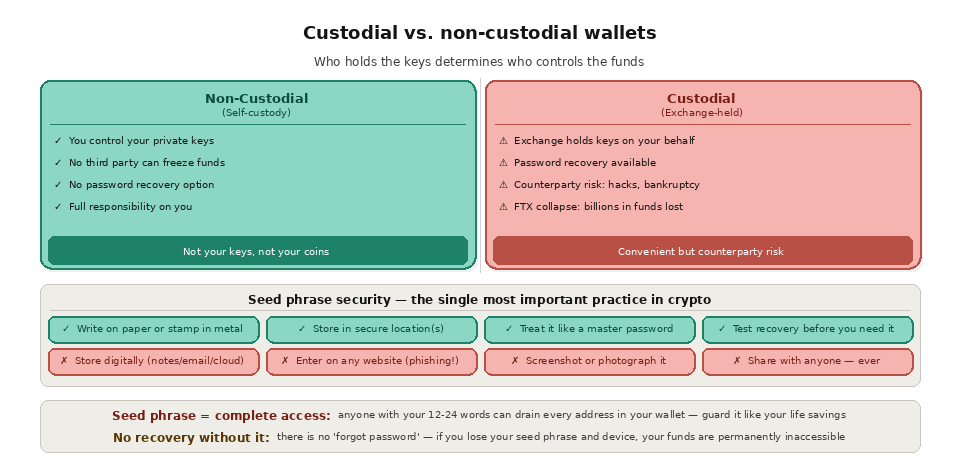
シードフレーズの適切な保管は、暗号資産において最も重要なセキュリティ対策です。紙に書き留めるか、金属に刻印してください。安全な場所(または複数の安全な場所)に保管してください。決してデジタル形式で保管しないでください。メモアプリ、スクリーンショット、クラウド上のドキュメント、メールの下書きなどには保存しないでください。信頼できるデバイスでウォレットの復元作業を行っている場合を除き、いかなるウェブサイトやアプリケーションにも入力しないでください。ユーザー を騙して偽のウェブサイトでシードフレーズを入力させるフィッシング攻撃は、仮想通貨盗難の最も一般的な原因の一つです。
カストディ型ウォレットと非カストディ型ウォレット 非カストディアルウォレット(セルフカストディウォレットとも呼ばれる)とは、ユーザーが秘密鍵を管理するウォレットのことです。MetaMask、Phantom、Ledger、Trust Walletはいずれも非カストディアルウォレットです。ユーザーが自ら秘密鍵を生成・保管し、そのセキュリティについてはユーザーが単独で責任を負います。いかなる企業も、ユーザーの資金を凍結したり、取引をブロックしたり、秘密鍵を紛失した場合にそれを復元したりすることはできません。
カストディアルウォレットとは、第三者(通常はCoinbaseやBinanceのような中央集権型取引所)が利用者に代わって秘密鍵を保管するものを指します。利用者はユーザー名とパスワードを使って従来のアカウントを通じて資金にアクセスし、取引所が裏で鍵を管理します。 カストディアルウォレットは、パスワードの復旧、二要素認証、顧客サポート といったおなじみのセキュリティ機能を提供しますが、カウンターパーティリスクも伴います。つまり、取引所がハッキングされたり、破産したり、口座を凍結したりした場合、資金にアクセスできなくなる可能性があります。 2022年11月のFTXの破綻は、このリスクを如実に示しました。取引所が鍵を管理していたため、数十億相当の顧客資金が失われたのです。
ウォレットはどのようにブロックチェーン ウォレットのあらゆる操作の背後には、ブロックチェーン ノードへのRPC接続があります。ウォレットにETHの残高が表示される際、ウォレットはノードにRPCリクエストを送信しています。トランザクションを送信する際、ウォレットはローカルで秘密鍵を使用してそのトランザクションに署名し、署名済みのトランザクションをRPCを介してネットワークにブロードキャストします エンドポイントを介してネットワークにブロードキャストします。
ほとんどのウォレットアプリには、デフォルトのRPCが設定されています エンドポイントが設定されており、その多くはユーザー を通じて、パフォーマンスやプライバシーの向上、あるいは信頼性 を実現するためにカスタムエンドポイントを設定できるようになっています。プロのユーザー やチーム は、混雑したパブリックRPCノードに依存することなく、高速で信頼性の高いアクセスを確保するため、Quicknode のような専用インフラストラクチャをウォレットのエンドポイントとして指定することがよくあります。
ホットウォレットとコールドウォレットの違いは何ですか? ホットウォレットとコールドウォレットの違いは、秘密鍵がインターネットに接続されたデバイスに触れるかどうかという点に集約されます。ホットウォレットは利便性を重視して鍵をオンラインで保管するのに対し、コールドウォレットはセキュリティを重視して鍵をオフラインで保管します。以下の表では、この2つを比較しています。
属性
ホットウォレット
コールドウォレット
インターネット接続
常時オンライン
オフライン
利便性
高
低い
セキュリティ
マルウェアやフィッシングの脅威にさらされる
キーは決してオンラインには接続されません
こんな方に最適
稼働中の取引 およびdapps
長期保存
例
MetaMask、Phantom
Ledger、Trezor
費用
無料
50ドルから200ドル
適切な仮想通貨ウォレットはどのように選べばよいでしょうか? 最適なウォレットは、保有する金額、取引の頻度、そしてセキュリティに対してどの程度の責任を負いたいかによって異なります。以下の表では、一般的なウォレットの種類と、それらが最も適している状況を示しています。
財布の種類
接続
こんな方に最適
セキュリティ
ブラウザ拡張機能
人気(オンライン)
DeFiおよびdappの利用
中程度
モバイルアプリ
人気(オンライン)
日常の支払い
中程度
ハードウェアウォレット
オフライン
長期保有
高
紙または金属製のバックアップ
オフライン
超低温貯蔵
安全に保管すれば高い
取引所(カストディ型)
人気(オンライン)
初心者とアクティブな方取引
プロバイダーによって異なります
どのようなものを選んだとしても、ウォレットはあくまで、 ブロックチェーン 資産が実際に保管されている場所への単なるインターフェースに過ぎません。特定のブランドを選ぶことよりも、自分のリスク許容度に合ったウォレットを選ぶことの方が重要です。
仮想通貨ウォレットのセキュリティをどのように確保すればよいですか? ウォレットのセキュリティは、主にシードフレーズと秘密鍵を保護することに尽きます。シードフレーズはオフラインで保管し、ウェブサイトには絶対に打ち込まないでください。また、署名を行う前には、すべての取引内容を確認してください。ハードウェアウォレットは、鍵がデバイスから決して外に出ないため、強力なセキュリティ層を追加します。鍵の管理がどのように機能するかを 理解することが基本であり、ホットストレージとコールドストレージ の適切なバランスをとることで、一度にさらされる情報の量を最小限に抑えることができます。
スマートコントラクトウォレットとは何ですか? スマートコントラクトウォレットは、単一の秘密鍵をオンチェーン にデプロイされたプログラム可能なロジックに置き換え、ソーシャルリカバリー、利用限度額、ガス料金不要のトランザクションといった機能を実現します。Ethereum では、これはby アカウントアブストラクションによって実現されています。このウォレットはスマートコントラクト であるため、従来の鍵ペア型ウォレットでは不可能なカスタムルールを適用することができます。このモデルの仕組みや、なぜウォレットの使いやすさや復旧性が向上するのかについては、「アカウントアブストラクション」 を参照してください。
よくある質問
仮想通貨ウォレットには、実際に私のコインが保管されているのでしょうか? いいえ。あなたのコインは、ブロックチェーン 上の記録として存在しています。ウォレットには、所有権を証明し、取引を承認するための秘密鍵が保管されています。鍵やシードフレーズを紛失すると、資産自体は依然として存在しているにもかかわらず、オンチェーン にアクセスできなくなってしまいます。
シードフレーズを紛失してしまった場合はどうなりますか? シードフレーズを紛失し、ウォレットデバイスにアクセスできなくなった場合、資金は復元できません。パスワードのリセット機能はなく、サポート のような手段で復元することもできません。そのため、シードフレーズはオフラインで、複数の安全な場所にバックアップしておく必要があります。
ハードウェアウォレットは買う価値があるのでしょうか? 多額の資産を保有している場合には、その通りです。ハードウェアウォレットは秘密鍵をオフラインで保管するため、遠隔からの攻撃者がそれにアクセスすることはできず、すべての取引はデバイス上で承認する必要があります。長期保有に対する保護効果を考えると、初期費用は比較的安価です。
ウォレットアドレスと秘密鍵の違いは何ですか? ウォレットアドレスは公開鍵から生成されるもので、他人があなたに資金を送金できるよう、自由に共有することができます。一方、秘密鍵は機密情報であり、そのアドレスからの送金を承認する権限を持つため、決して他人と共有してはいけません。秘密鍵を所持している者が、その資金を管理することになります。
1つのウォレットで、複数のブロックチェーン の資産を管理することは可能ですか? はい。最近のウォレットの多くは、単一のシードフレーズから複数のネットワーク用のアドレスを生成するため、1つのバックアップがあれば、Ethereum 、Solana 、その他のチェーンにまたがる資産を復元することができます。ウォレットは、RPCを介して各ネットワークと通信し エンドポイント を介して各ネットワークと通信し、残高の読み取りやトランザクションの送信を行います。
Quicknode のQuicknode Quicknode ウォレットやウォレットと連携したアプリケーションが依存するRPCインフラストラクチャを提供します。ウォレットが残高を照会したり、トランザクションを送信したり、新しいブロックイベントを購読したりする際は、RPCを介してノードと通信しています エンドポイント。Quicknode のCore APIは、世界中に分散された低遅延のエンドポイントと99.99%の稼働率により、80以上のチェーンにわたってこのアクセスを提供します。カスタムウォレットソリューションを構築するウォレット開発者開発者 向けに、Quicknode の拡張APIは、複数の資産にわたるトークン残高の取得、トランザクション履歴の取得、ENS名の解決といった一般的なウォレット操作を簡素化し、必要なRPC呼び出しの数を削減するとともに、エンドユーザー体験ユーザー を向上させます。
参考資料 // Tags
暗号資産ウォレット ブロックチェーン ウォレット
// Publisher
Quicknode
2026年6月3日更新
2026年3月20日 — 読了時間11分