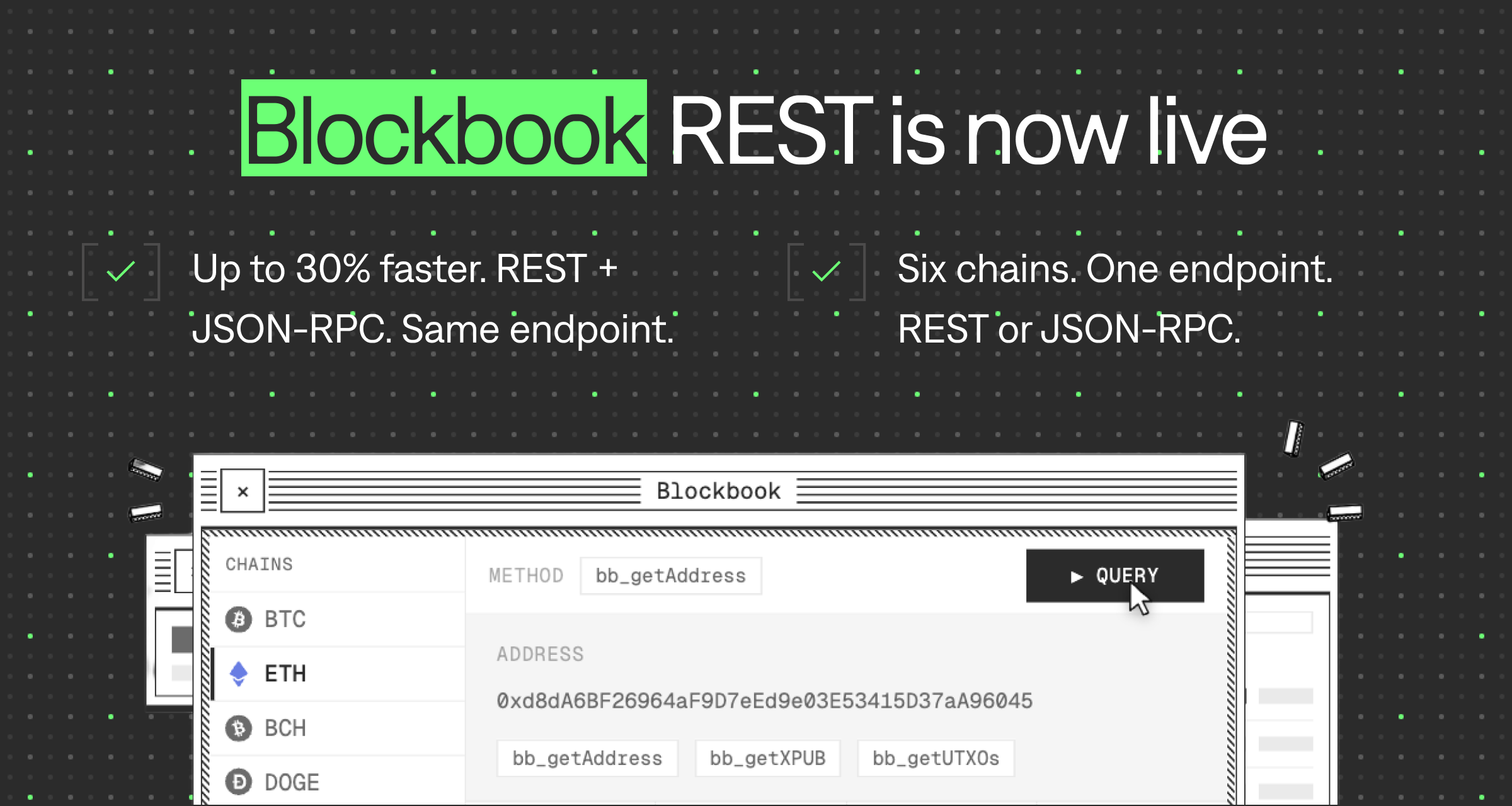
Blockbook REST가 출시되었습니다. 코드 변경 없이 자체 호스팅형 Blockbook에서 마이그레이션하세요.
Blockbook REST가 출시되었습니다. 코드 변경 없이 자체 호스팅형 Blockbook에서 마이그레이션하세요.

2026년 6월 23일 — 읽는 데 3분 소요
최신 소식을 받아보세요
최신 엔지니어링 인사이트, 제품 업데이트, 웹3 뉴스를 여러분의 이메일로 바로 받아보세요.
⚡ 신작: 엘리시움 Testnet QuicknodeTestnet HyperEVM 상의 Kinetiq EVM 체인 엔드포인트
[받기] endpointSOC 2 Type II 인증 · ISO 27001
Blockbook REST가 출시되었습니다. 코드 변경 없이 자체 호스팅형 Blockbook에서 마이그레이션하세요.
2026년 6월 23일 — 읽는 데 3분 소요
최신 엔지니어링 인사이트, 제품 업데이트, 웹3 뉴스를 여러분의 이메일로 바로 받아보세요.
Quicknode (endpoint)가 있습니다. 대부분의 워크로드에서는 이 정도면 충분합니다.
하지만 주소 단위 데이터는 사정이 다릅니다. 주소별 거래 내역, 여러 주소의 잔액, 입금 확인, UTXO 조회 등. 이 모든 것은 순수한 RPC가 원래 지원하도록 설계된 기능이 아닙니다.
지갑 및 결제 팀은 이 문제를 끊임없이 겪습니다. 네이티브 RPC 메서드로는 잔액 조회가 불가능합니다. 우회 방법은 효과가 있습니다. 반복 호출, 블록 스캔, 맞춤형 데이터베이스, UTXO 추적 로직 등이죠. 하지만 문제는 점점 쌓여만 갑니다. 제품과 함께 증가할 뿐 결코 회수되지 않는 엔지니어링 비용이 발생합니다.
Blockbook은 주소를 색인화하므로, 앱에서 원시 블록을 바탕으로 주소를 재구성할 필요가 없습니다.
Blockbook은 원래 Trezor가 지갑 인프라를 위해 개발한 블록체인 인덱서입니다. Quicknode 에서는 이를 6개 체인( Bitcoin, Bitcoin Cash, Dogecoin, Litecoin, Zcash, Ethereum)에 걸쳐 관리형 애드온으로 운영하고 있습니다.
단 한 번의 API 호출로 전체 거래 내역, 현재 잔액, 수취 및 송금 총액, 미확인 내역을 확인할 수 있습니다. 주소와 xpub을 모두 지원하므로, 단일 식별자로 지갑 전체를 조회할 수 있습니다. 이 서비스는 여러분이 이미 사용하고 계신 Quicknode endpoint 에 연동됩니다. 별도의 인덱서나 추가 인프라가 필요하지 않으며, 유지 관리할 사항도 전혀 없습니다.
Blockbook을 처음 이용하시나요? 여기서 시작하세요.
Blockbook의 오픈소스 소프트웨어는 기본적으로 REST를 지원합니다. Trezor가 바로 그렇게 구축했기 때문입니다. Quicknode 의 초기 구현은 그 위에 JSON-RPC 인터페이스만 제공했습니다. 자체 호스팅형 Blockbook에서 마이그레이션하는 개발자들은 Quicknode 로 이동하기 위해 기존 REST 호출을 JSON-RPC로 다시 작성해야만 했습니다.
더 이상 그런 것은 아닙니다.
이제 두 인터페이스 모두 동일한 endpoint 에서 작동합니다. REST API를 직접 호출하세요:
curl -X GET \
"https://YOUR_QUICKNODE_ENDPOINT.com/addon/3/api/v2/address/bc1p72h09wplu60qdxyr8q3ftgdhga7jxnjhdz08qs4u9we9q3lzmqmqa4yzj6?details=txids"
아니면 JSON-RPC를 계속 사용하세요:
curl -X POST "https://YOUR_QUICKNODE_ENDPOINT.com" \
  -H "Content-Type: application/json" \
  --data '{"method":"bb_getAddress","params":["bc1p72h09wplu60qdxyr8q3ftgdhga7jxnjhdz08qs4u9we9q3lzmqmqa4yzj6",{"details":"txids"}],"id":1,"jsonrpc":"2.0"}'
나만의 스택, 나만의 인터페이스.
방법 | 다음에서 이용 가능 | 참고 |
|---|---|---|
bb_getEstimateFee | 6개 체인 모두 | EVM 결과에는 수수료율이 아닌 가스 가격이 표시되었습니다. |
bb_getMultiTickers | 6개 체인 모두 | 체인 사용 제한 없음 |
bb_getRawBlock | UTXO 체인만 해당 (BTC, BCH, ZEC, DOGE, LTC) | ETH에서는 이용 불가 |
bb_getFeeStats | UTXO 체인만 해당 (BTC, BCH, ZEC, DOGE, LTC) | ETH에서는 이용 불가 |
문서의 문서에 나와 있습니다.
Quicknode 의 Blockbook 응답 속도가 최대 30% 빨라졌습니다. 여기에는 주소 조회, 거래 조회, UTXO 검색 등이 포함됩니다. 바로 귀사의 제품에서 가장 자주 수행하는 호출들입니다. 사용자 측에서는 아무런 변경 사항도 없습니다.
자신만의 Blockbook 서버를 운영한다는 것은 인덱스를 직접 관리한다는 뜻입니다. 또한 모든 동기화 오류, 모든 업그레이드, 그리고 새벽 2시에 오는 모든 알림도 직접 처리해야 합니다.
Quicknode 인덱스를 관리하고, 체인 업그레이드를 처리하며, 인프라를 모니터링합니다. 이제 기존 REST 호출을 Quicknode endpoint 에서 바로 사용할 수 있습니다. 코드 변경은 전혀 필요하지 않습니다. Blockbook은 월 75달러부터 이용 가능합니다. 필요한 체인을 추가하고, 언제든지 제거할 수 있습니다.
현재 자체 호스팅형 Blockbook을 사용 중이라면, REST 지원 덕분에 마이그레이션을 망설이게 했던 마지막 이유마저 사라졌습니다.
Blockbook이 가장 필요한 팀은 주소 가시성이 바로 제품인 곳입니다. 주소나 xpub을 통해 거래 내역과 잔액을 조회하는 지갑, 입금 내역을 추적하고 확인 워크플로를 실행하는 거래소, 필요 시 전체 주소 내역을 제공받아야 하는 블록 탐색기, 대규모로 거래를 모니터링하는 결제 처리 업체 및 계정 조정 플랫폼 등이 이에 해당합니다.
이미 Quicknode 을 이용 중이신가요? 클릭 한 번으로 기존 endpoint 에 Blockbook을 추가하세요. Blockbook 추가 →
Quicknode 를 처음 이용하시나요? 무료로 가입하세요. Blockbook은 월 75달러부터 이용 가능합니다. 지금 무료로 시작하기 →
시작할 준비가 되셨나요? REST 및 JSON-RPC 참조 자료, 메서드 세부 정보, 설정 안내서는 다음에서 확인하실 수 있습니다. quicknode.com/docs/bitcoin/blockbook/overview에서 확인할 수 있습니다.
2017년에 설립된 Quicknode 은 개발자와 기업을 위해 엔터프라이즈급 블록체인 인프라를 제공합니다. 99.99%의 가동률과 76개 이상의 체인을 지원함으로써, 팀들은 타협 없이 온체인 애플리케이션을 구축하고 확장할 수 있습니다.