Five Tips to Help Land Your Solana Transactions
Five Tips to Help Land Your Solana Transactions
Explore essential strategies like priority fee management, compute unit optimization, and Jito bundle integration to ensure your Solana transactions land quickly and efficiently.

October 23, 2024 — 5 min read

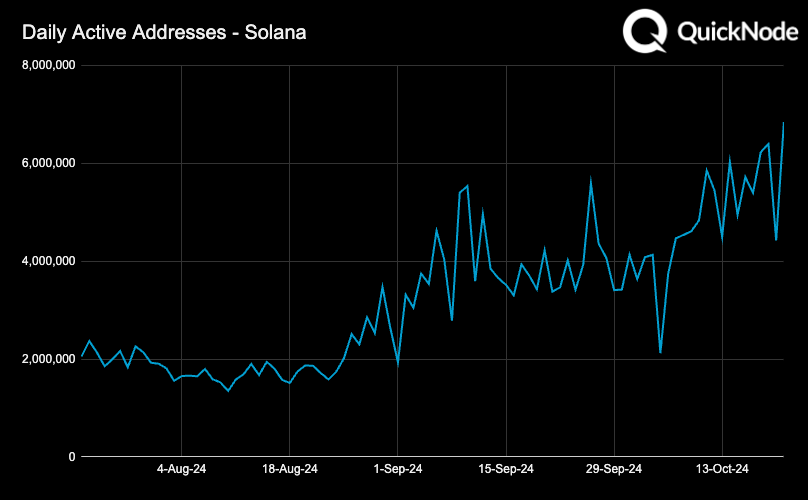
Solana Summer shows no sign of slowing down. Consumer activity on Solana has grown a lot over the past several months, and daily active addresses hit an all-time high of over 6M:
Fast DeFi growth is driving much of this. The top Solana programs over the past 30 days are all DeFi protocols: Jupiter, Raydium, Orca, Meteora, Lifinity, Phoenix, OpenBook, and Pump.fun:
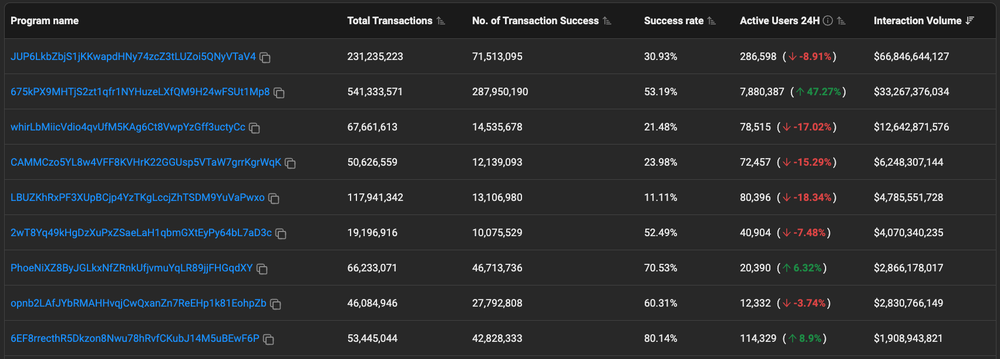
Source: Solscan, October 22, 2024
Solana recently led all chains in DeFi volume, with over $13Bn in activity over the past 7 days:

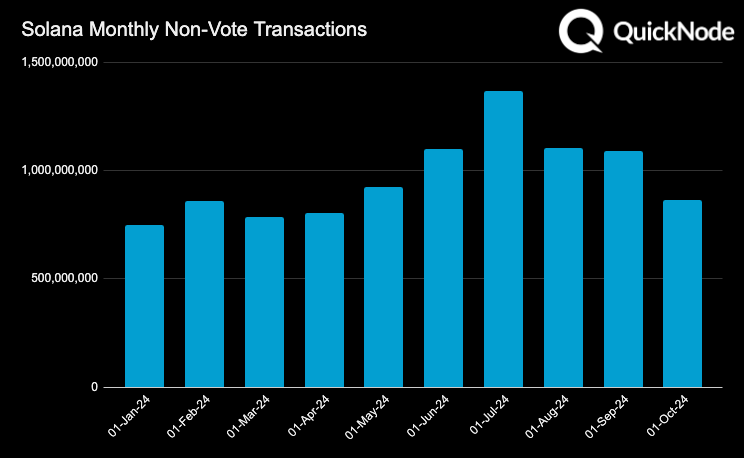
Zoom out, and over 1 billion non-vote transactions have landed on Solana mainnet each month for the past 4 months:
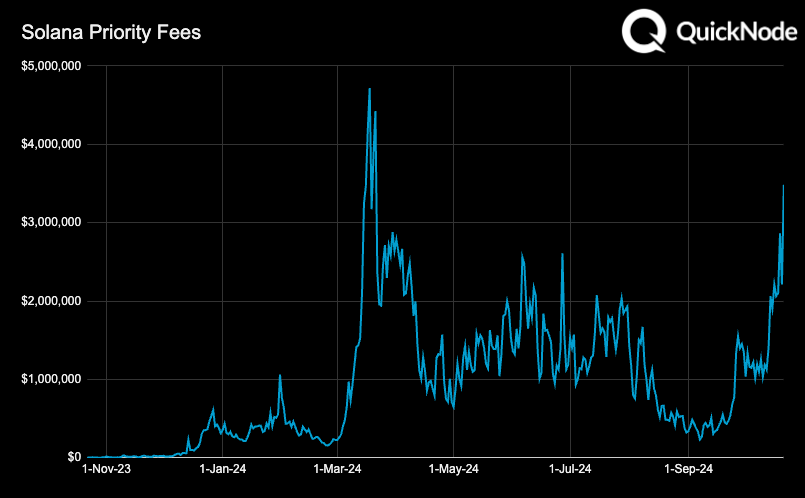
All this activity means more competition for block space. That's pushing priority fees up to their highest levels since their peak in March this year.
With this much network activity, you need tools to tune your transactions so they're more likely to make it into a block.
Increase Your Transaction Success Rate with These 5 Tips
Some factors are outside your control. But there are several ways to raise the odds that your transaction lands in a block and confirms quickly:
Priority fee management: Use priority fees, and update them dynamically with the Priority Fee API, to raise your priority when the network is congested
Compute unit optimization: Use transaction simulation to set accurate compute unit limits so transactions don't get dropped
Transaction setup: Build transactions with the right priority fee and compute unit settings to improve success rates
Jito bundle integration: Use Jito Bundles to manage complex, multi-transaction operations
Landing confirmation: Confirm that transactions landed, and add failover logic for ones that didn't
Priority Fee Management
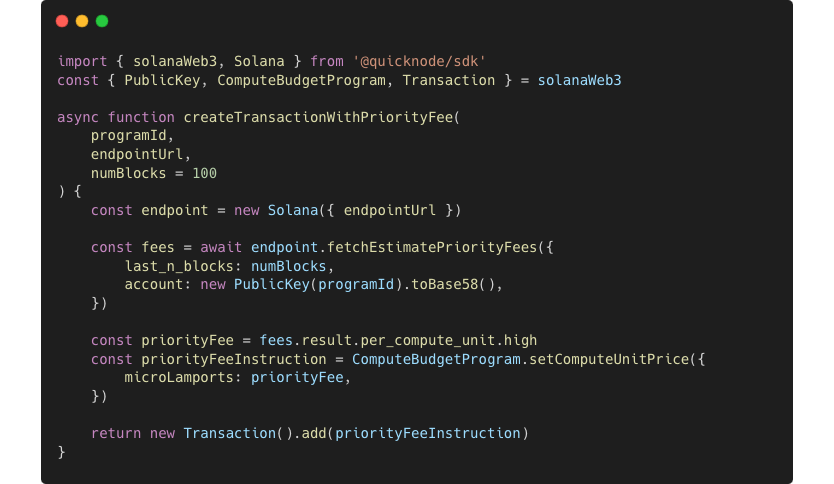
When the network is busy, priority fees are one of the best ways to get your transaction confirmed fast. They let you bid for a higher spot in the block leader's queue, which makes it more likely your transaction gets into a block. Priority fees are technically optional, but during heavy congestion they're effectively required.
Quicknode's Priority Fee API shows recent priority fee levels for successful transactions, so you can pick the right fee. During congestion, use the 80th percentile or higher of recent fees ("high" or "extreme" in our API response) to greatly improve your chances.
Compute Unit Optimization
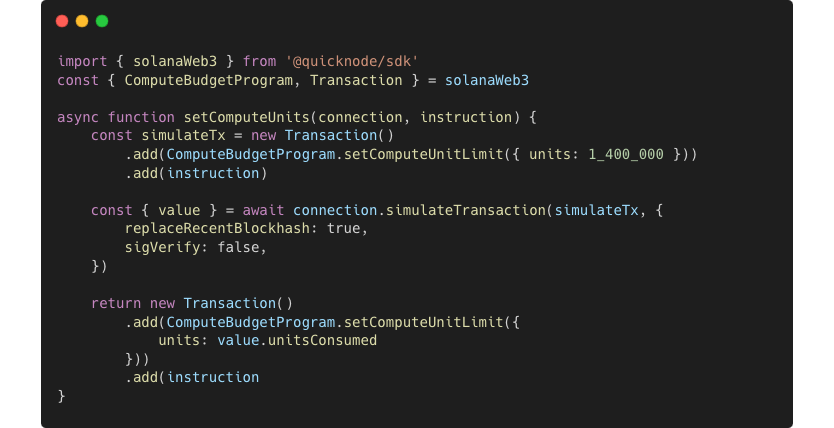
Tuning compute units (CU) keeps transactions from being dropped for going over block limits. Every Solana transaction uses CU, and more complex transactions use more.
Solana limits compute per block, per account, and per transaction. So only request the compute units your operation actually needs. You can estimate this by simulating your transaction. Just include a compute unit instruction in your test transaction:
Transaction Setup
Building your transaction correctly can raise its landing rate. Combine priority fees and compute unit tuning when you assemble it:
Create a transaction with your instructions
Fetch and add priority fees
Add a priority fee instruction to the transaction
Simulate the transaction with a compute unit limit instruction
Add a compute unit limit instruction to the transaction with the computed limit from the simulation
Fetch and add a recent blockhash to the transaction
Sign and send the transaction
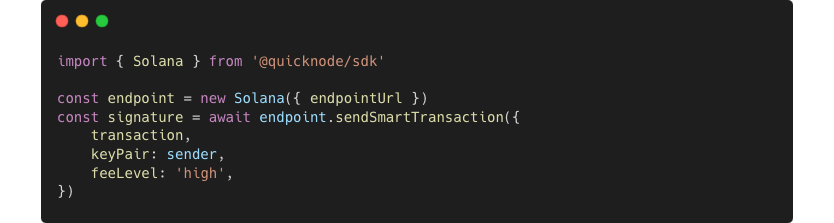
See our sample code for transaction assembly. Or let Quicknode handle the complexity with the Quicknode SDK:
Jito Bundle Integration
For advanced tuning and bundling, try the Lil' JIT Marketplace add-on. It lets you create Jito Bundles, which run multiple transactions together, all or nothing.

Landing Confirmation
To make sure your transaction landed in a block, use the getSignatureStatuses RPC method to check its status:

Write a simple polling function to check your transaction's status. If it isn't confirmed after 150 slots (about 60 seconds), your blockhash expires and you can retry.
See our Transaction Optimization Docs to learn more about these strategies.
Quicknode's Ongoing Upgrades: Enhancing Your Transaction Experience
We keep improving our infrastructure so we can handle your transactions efficiently as network activity grows. Here are some key upgrades:
Wider global reach: We keep growing our node footprint and adding new regions and infrastructure providers for consistent coverage and performance worldwide.
Latest hardware: We keep deploying the newest hardware and securing priority access to more servers, so we stay ahead of rising network demand.
In-house hyperscaling: Our distributed hyperscaling technology goes beyond the base Solana client. We've refined it further to improve transaction routing, support new methods, and deliver large performance gains.
Tools for better landing rates: Our Priority Fee API and Lil' JIT APIs help customers get the best possible landing rates, especially during congestion. Explore all our Solana Marketplace add-ons, including the Metis Jupiter API, Digital Asset Standard API, and more.
These upgrades are built to make your transaction processing as reliable and efficient as possible.
Conclusion
Stay on top of network conditions, use priority fees well, and build on Quicknode's infrastructure, and your Solana transactions will be set up to succeed.
High-performance networks like Solana are clearly gaining ground. The technology will keep changing and face new challenges, but today's surge in activity shows growing demand for blockchains that scale.
At Quicknode, we're committed to staying ahead of these trends so our infrastructure and tools are ready for developers and projects, however the market shifts. Whatever comes next, we'll keep delivering reliable, efficient, flexible services for Web3. Not a Quicknode customer yet? Sign up for a free account today!
Reliable transaction landing starts with the Solana RPC endpoint you send through.
About Quicknode
Founded in 2017, Quicknode deploys institutional-grade blockchain infrastructure for developers and enterprises. With 99.99% uptime and support for 75+ chains, teams build and scale onchain applications without compromise.
Stay updated
The latest engineering insights, product updates, and web3 news delivered straight to your inbox.