Top Blockchain Data Tools: How to be Informed Onchain?
Top Blockchain Data Tools: How to be Informed Onchain?
Web3 in 2025 runs on data. This guide covers the best onchain data tools and analytics platforms and how Quicknode Streams powers them.

June 9, 2025 — 8 min read
Web3 in 2025 is no longer an experiment or a theory, it’s a mature, high-performance ecosystem building the future of finance, internet, privacy, and more.
Developers are more sophisticated, products are more advanced, institutional capital is flowing in, and the infrastructure stack is deeper than ever.
This evolution has fundamentally shifted the landscape: what once required experimental approaches now demands enterprise-level precision and reliability.
At the heart of this transformation lies a critical requirement: access to high-quality, real-time blockchain data.
Today, knowing where liquidity is moving, how smart contracts are executing, and which assets are gaining traction isn’t just useful, it’s a must-have.
But staying informed onchain is increasingly complex.
Massive data volumes, fragmented tooling, and challenges like chain reorganizations and delayed indexing create real friction for developers, analysts, and investors alike. The solution lies in leveraging specialized blockchain data platforms designed to handle these complexities at scale.
This comprehensive guide examines the most powerful blockchain analytics tools available to developers and researchers in 2025.
Why Onchain Data Matters in 2025
In 2025, onchain data is the foundation for decision-making across nearly every corner of web3.
While narrative-driven speculation and 'metas' still call the shots, there is a growing need for data-driven conviction. Be it for evaluating a protocol’s financial health, tracking wallet behavior, or analyzing liquidity flows, raw blockchain data now serves as the source of truth.
Transparency and Objectivity as Competitive Advantages
Unlike traditional financial markets where key data remains siloed within institutions, blockchain networks provide unprecedented transparency.
Every transaction, smart contract interaction, and protocol change is permanently recorded and publicly accessible.
This creates a level playing field where data analysis capabilities, rather than insider information, determine competitive advantage. Developers can analyze competitor protocols in real-time, traders can track whale movements as they happen, and researchers can validate hypotheses with complete historical datasets.
Institutional Demand has Raised the Bar for Onchain Data
The entrance of institutional capital into web3 has brought greater scrutiny to data infrastructure.
Compliance, risk models, asset pricing, and algorithmic strategies all depend on precise, high-frequency data. Firms now require accurate, lossless streams of information — delivered reliably, at scale, and in real time. This demand has reshaped expectations around everything from latency to backfill capabilities.
Common Use Cases for Onchain Data: Trading, Development, Research
The value of onchain data spans multiple roles:
Traders leverage live feeds of swaps, transfers, and liquidation events to power strategies.
Development teams use on-chain analytics to monitor protocol health, optimize gas usage, and understand user behavior patterns.
Researchers aggregate protocol-level metrics and trace address behavior to study network effects, tokenomics models, and cross-chain capital flows.
As these roles become more sophisticated, the need for dependable, granular onchain data only intensifies.
Next, let’s take a look at the top onchain data platforms that are making it easy for everyone to access, read, and leverage onchain data.
Top Blockchain Data Tools in 2025
The following platforms have become essential for developers, analysts, and investors who need actionable, real-time insight into onchain activity.
Dune Analytics
Dune democratizes blockchain analytics through its SQL-based query interface, allowing users to create custom dashboards and visualizations from raw blockchain data. The platform's strength lies in its community-driven approach, where analysts share queries and insights, creating a collaborative ecosystem for on-chain research.
Most relevant for,
Developers building custom analytics,
Researchers conducting deep-dive investigations, and
Traders who find alpha using onchain data.
Nansen
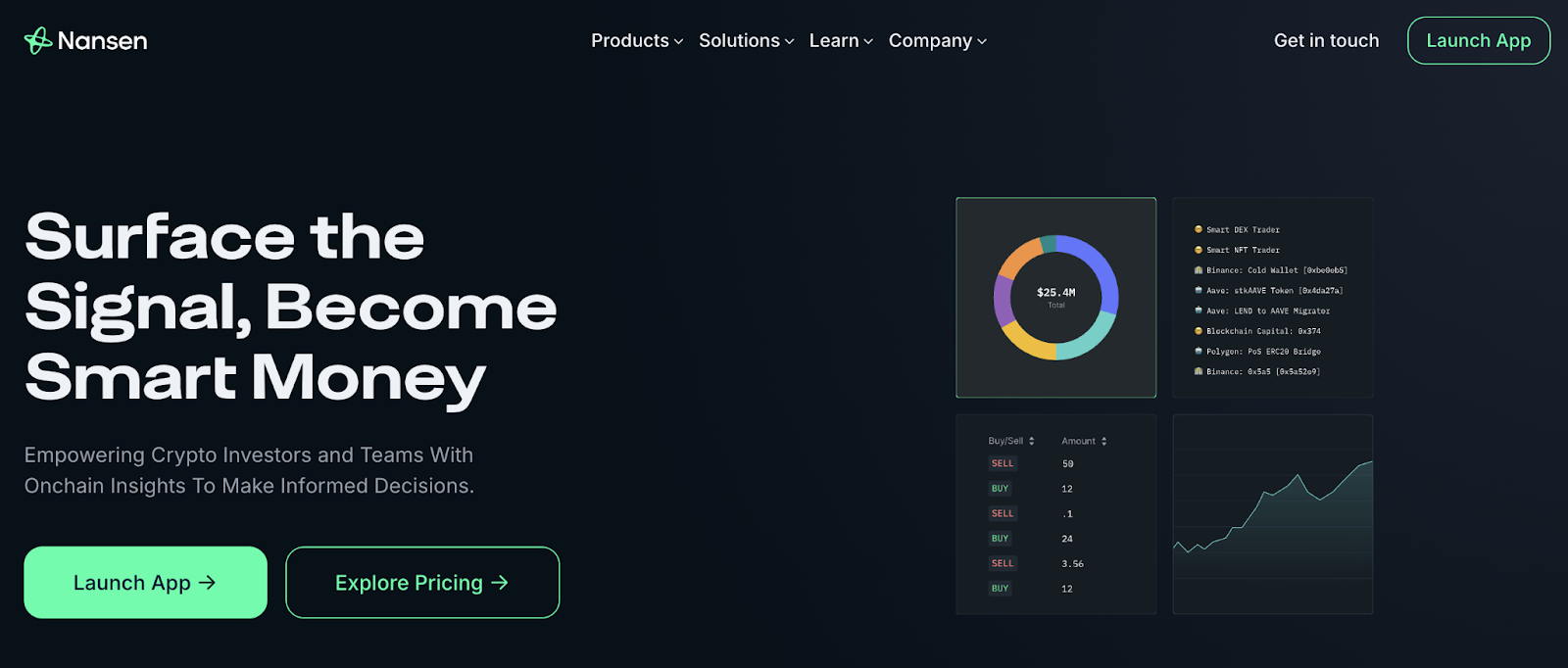
Nansen combines on-chain data with proprietary wallet labeling to provide behavioral analytics and smart money tracking. The platform excels at identifying influential wallets and tracking their activities across DeFi protocols, making market movements visible before they become widely apparent.
Most relevant for:
Traders tracking institutional and whale activity
Analysts monitoring token flows and investor behavior
Protocol teams conducting user segmentation and cohort analysis
Glassnode
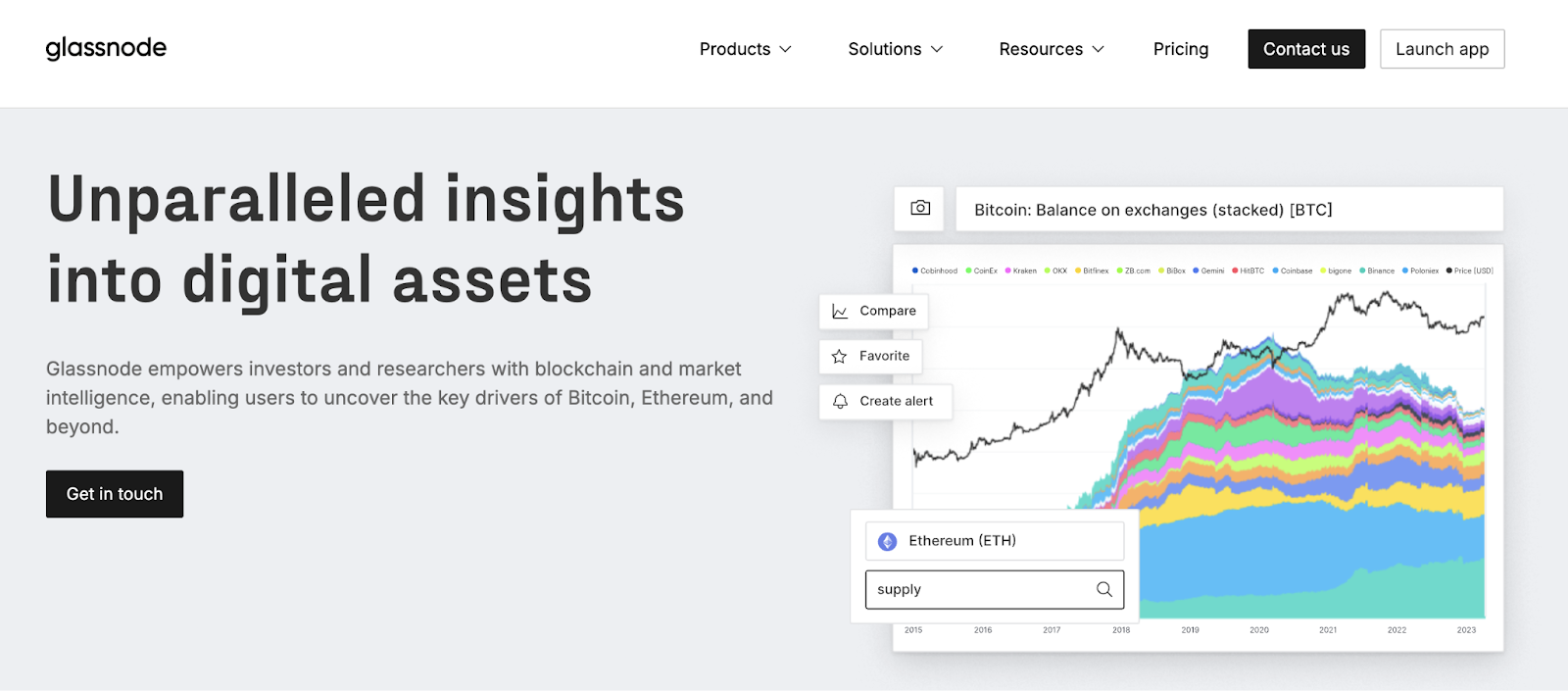
Glassnode specializes in Bitcoin and Ethereum network health metrics, providing institutional-grade market intelligence through comprehensive on-chain indicators. The platform focuses on macro-level trends and long-term market cycles rather than granular transaction analysis.
Most relevant for:
Portfolio managers building investment strategies based on network fundamentals
Macro analysts studying market cycles and adoption trends
Financial institutions requiring standardized crypto market metrics
Messari

Messari provides structured onchain metrics, curated protocol data, and governance tracking in one unified research platform. The platform is also well-known as a comprehensive information hub for producing professional-grade research combining on-chain data with fundamental analysis and macro-market intelligence.
Most relevant for:
Asset managers conducting fundamental token analysis
Governance participants tracking proposals and changes
Founders benchmarking growth and performance metrics
DeFiLlama
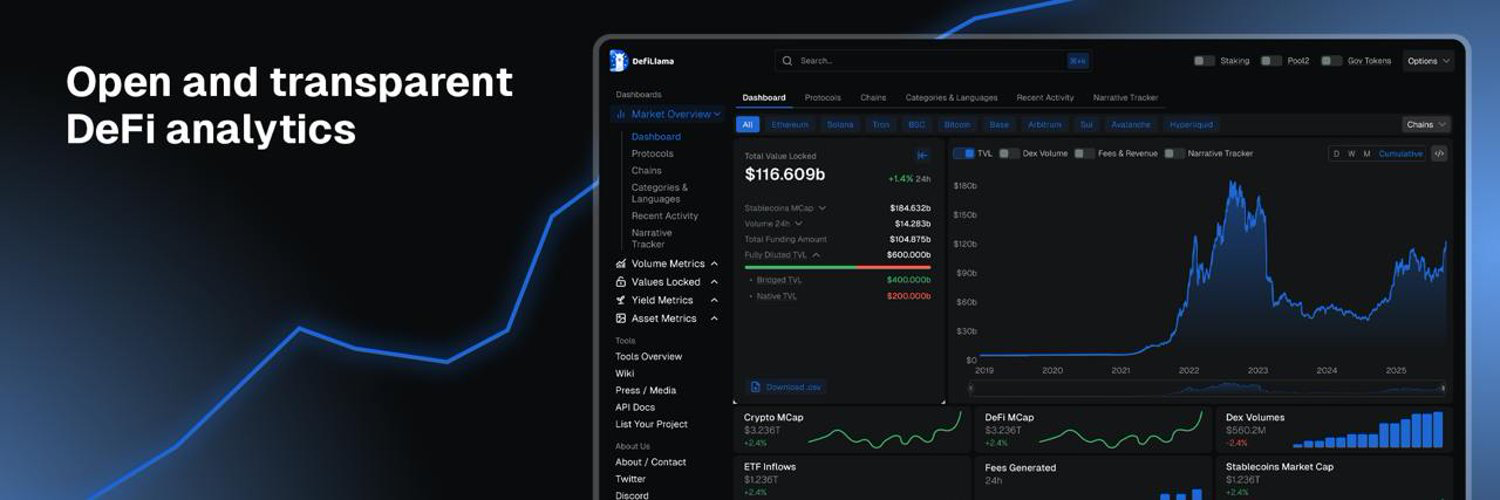
DeFiLlama offers comprehensive TVL, yield, and fee data across protocols and chains, making it a vital tool for monitoring DeFi markets. The platform's open-source approach and comprehensive protocol coverage make it the definitive source for DeFi market intelligence.
Most relevant for:
DeFi traders tracking liquidity shifts and revenue metrics
Developers benchmarking protocol performance
Yield farmers identifying high-opportunity protocols and strategies
CryptoQuant

CryptoQuant focuses on exchange flows and market microstructure data, providing insights into institutional trading patterns and market liquidity dynamics. The platform specializes in tracking large-scale capital movements between exchanges, wallets, and institutional custody solutions.
Most relevant for:
Professional traders analyzing market liquidity and institutional flows
Market makers optimizing inventory management and risk exposure
Quantitative researchers building predictive models based on flow data
Arkham Intelligence
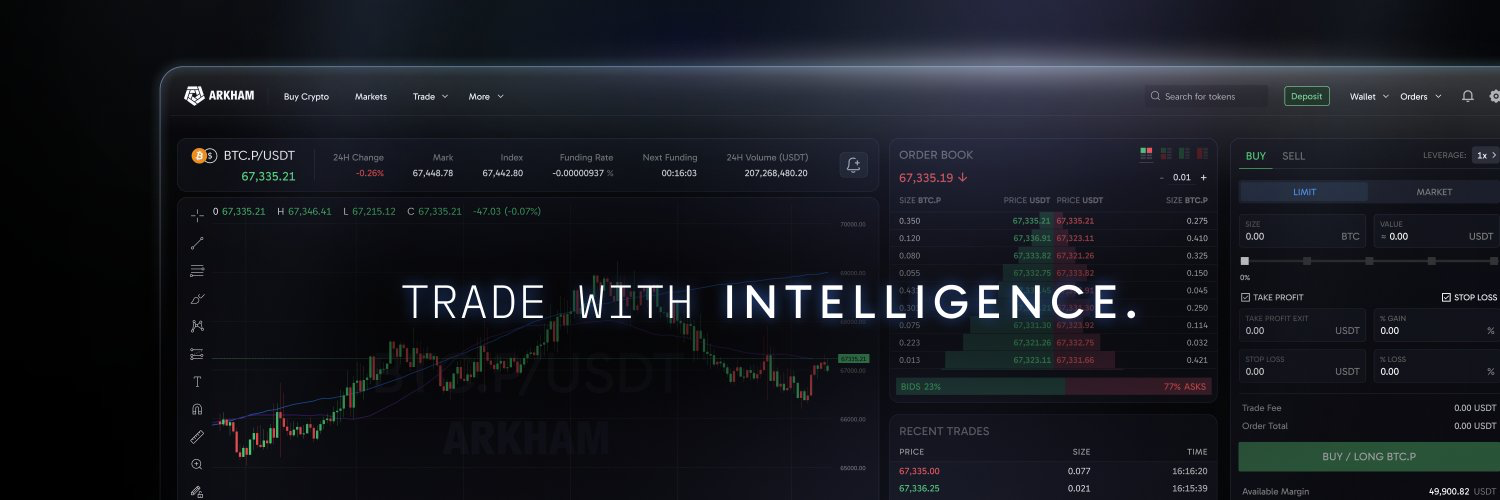
Arkham uses AI-powered entity resolution to map blockchain addresses to real-world identities and organizations, creating a comprehensive view of on-chain relationships. The platform excels at tracking funds across complex transaction paths and identifying connected wallet clusters through advanced graph analysis.
Most relevant for:
Compliance teams conducting AML investigations and regulatory reporting
Security researchers tracking stolen funds and investigating exploits
Institutional analysts mapping counterparty risks and exposure networks
Flipside Crypto
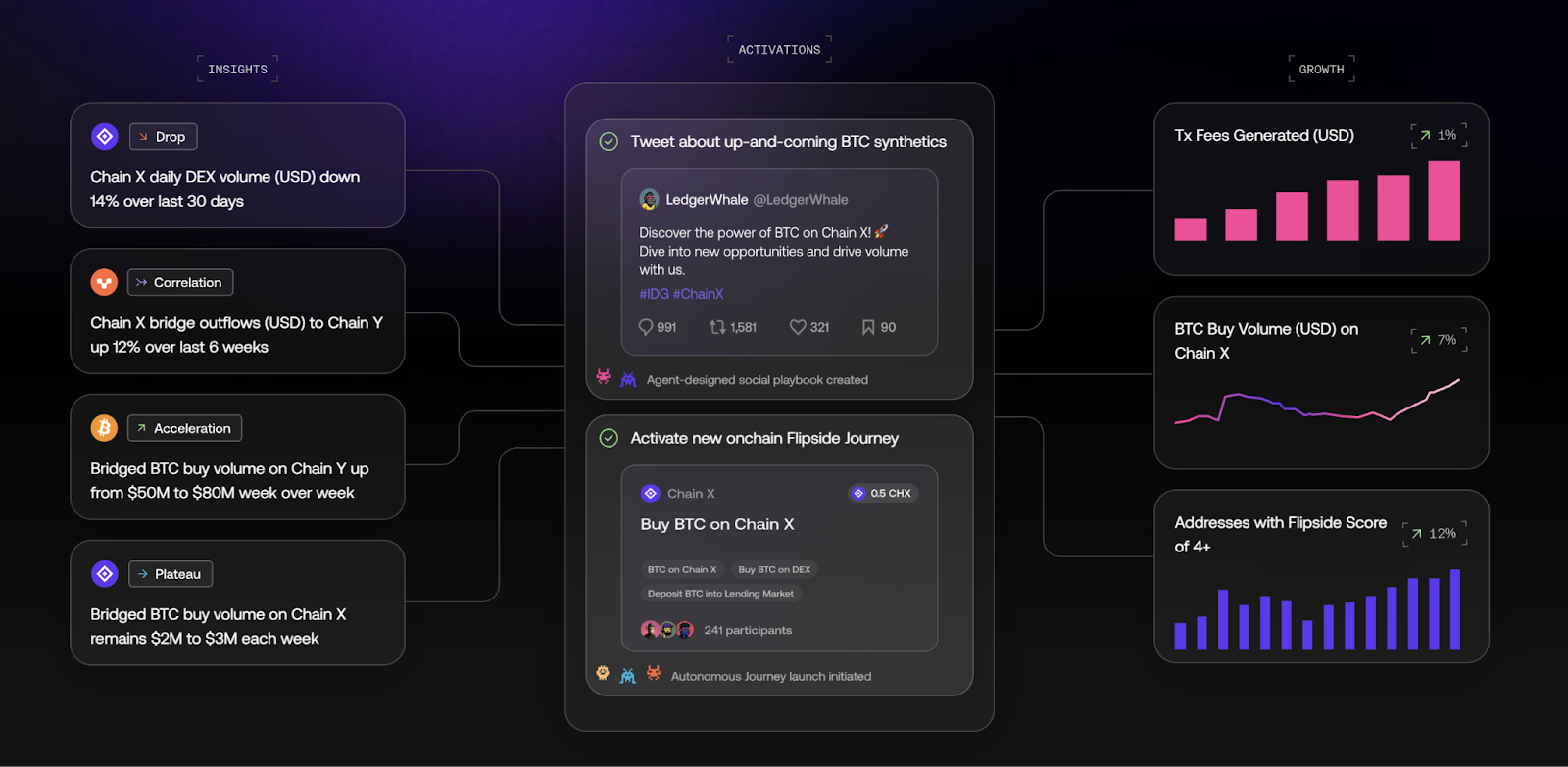
Flipside Crypto combines blockchain analytics with bounty-driven research programs, incentivizing community analysts to produce high-quality insights and datasets. The platform provides both self-service analytics tools and curated research reports across multiple blockchain ecosystems.
Most relevant for:
Protocol teams seeking user-generated analytics
Community contributors participating in DAO research
Developers integrating ready-to-query datasets into dashboards
These leading blockchain analytics platforms share a common foundation: they all depend on high-quality, low-latency data streams to deliver accurate insights. The challenge lies not just in accessing blockchain data, but in ensuring it arrives complete, consistent, and without the delays that can render insights obsolete.
This is where specialized data streaming infra becomes critical — guaranteed data delivery, proper handling of chain reorganizations, and the ability to process massive volumes of transactions across multiple networks simultaneously — everything in one place and together.
Quicknode Streams: Real-Time Blockchain Data at Enterprise Scale
Quicknode Streams is a real-time data delivery pipeline purpose-built for web3, designed to provide access to 69+ blockchains’ data with enterprise-grade reliability.
Unlike traditional polling-based approaches that create inefficiencies and potential data gaps, Streams uses a push-based model to deliver continuous, guaranteed data flow directly to developers' preferred destinations.
Why Streams Stands Out
Streams eliminates the need for complex ETL systems, constant polling, and reorg handling logic. It ensures reliable delivery of critical datasets — blocks, transactions, logs, receipts, traces — in real time, or across specified historical ranges.
7x faster backfill speeds than traditional syncing
60% cheaper resource utilization for large-scale data handling
Saves up to 80 hours of engineering effort with pre-built integrations
Flexible Destination Options
Streams supports multiple destination types to match different architectural needs:
Webhooks for real-time applications requiring immediate data processing
S3-Compatible Storage for large-scale data archiving and batch processing
PostgreSQL for structured relational data storage with advanced querying capabilities
Snowflake for enterprise data warehousing with elastic scaling
Functions for custom data transformation and filtering logic
The Future of Web3 Hinges on Reliable Onchain Data Infrastructure
The blockchain analytics tools highlighted in this guide represent the current state of on-chain intelligence, each serving specific needs within the evolving web3 ecosystem. However, their effectiveness ultimately depends on the quality and reliability of underlying data infrastructure.
As institutional adoption accelerates and analytical requirements become more sophisticated, the platforms that are built on scalable, real-time, and lossless onchain data and delivery will have a competitive advantage.
The future belongs to analytics solutions powered by enterprise-grade data streaming infrastructure like Quicknode Streams.
Frequently Asked Questions (FAQ)
How do I choose between different on-chain data tools for trading?
Consider your specific needs: Nansen excels at whale tracking, CryptoQuant focuses on exchange flows, while Glassnode provides macro market indicators. Many professional traders use multiple platforms for comprehensive market intelligence.
What are the best blockchain analytics platforms for developers in 2025?
The top platforms include Dune Analytics for custom SQL queries, DeFiLlama for DeFi protocol data, and Nansen for wallet behavior analysis. Each serves different development needs from real-time monitoring to historical research.
What infrastructure powers real-time blockchain data tools?
High-quality data tools rely on streaming infrastructure like Quicknode Streams, which delivers exactly-once, in-order blockchain data across multiple chains. This ensures that insights are based on reliable and timely datasets.
About Quicknode
Founded in 2017, Quicknode deploys institutional-grade blockchain infrastructure for developers and enterprises. With 99.99% uptime and support for 77+ chains, teams build and scale onchain applications without compromise.
Stay updated
The latest engineering insights, product updates, and web3 news delivered straight to your inbox.